Showing posts with label USMLE TUTOR. Show all posts

Thursday, July 9, 2015

Improving on a weak subject


As part of your preparation for any USMLE exam, you should have a good strategy to increase your potential by preparing your weaker subjects and making them as strong as your favorite topic. Many students have made the same question how do I make a strong topic from a weak one, this week we will give some helpful tips to increase your strength in difficult or weak areas.

Identify your weaknesses.

Everyone has a topic they don’t know much about or don’t like at all, that’s ok. We all have strengths and weaknesses in our preparation, to identify your own weaknesses there are three ways to know for sure you are not doing as good as you think.

1-Pick the topics you really dislike, surely enough you have a couple subjects you don’t like or even hate, from the list that is relevant to each exam. Take note of those subjects you didn’t like to study most commonly these are the subjects that you are weak in your preparation.

2-Look for the really hard topics, try and think the subjects you find the most complicated or the ones you always keep forgetting, these will be part of your weak spots.

3-Compare the topics included for the exam with your own preparation, some schools make more emphasis in some subjects while leave others in a relative low level, you should select from the list of subjects the ones that your school didn’t cover or did poorly. For IMGs generally medical genetics, behavioral sciences, ethics are different from the U.S. schools. Also EKG and microscopic images are not easy to remember.

Once you have identified your weak subjects, make a list of them and keep it in some of your review books, you will need to take some out after our next steps.

Make sure they are relevant.

Surely we have topics that are not our strong side, like for me its oncology, it keeps changing and it’s hard for me, specially the pharmacology. Once you have a list of your relative weak topics it’s important to find how relevant they are for the exam. If they are not high yield topics you should not include them in your list. Some hard topics include only 2 or 3 questions, if this is the case you should leave them at the end of the list. 

Now you have a list of your weak topics and their priority in order. Next up find out if they really are your weaknesses.

Take focused question banks.

To be sure that you need more effort in some areas you should test them against a set of questions to see how good /bad you’re doing. There’s no point in assuming you are doing bad, you should confirm with a focused set of questions banks, as you go through those questions you will know firsthand if the questions make sense or not if you know what they are about or if it sounds totally new.

Take a 50 question test with a subject you think is one of your weaknesses, a score lower than half before studying should tell you there’s one that needs improving. Also it should be high yield to be important keep that in mind.

 Now your list is more real and priorities are in order, the next step will be to make a schedule taking into account what you know now.

Start from the lowest.

Everyone should make their own schedule and program the order of material to cover accordingly, even when courses, guides and reviews have their own order for the material of any step, you should make your own starting from your weakest topic to the one you can handle more easily, after all for the last part you may be a little exhausted.

If a topic results to be hard but is low yield leave it for the end, you should make the highest yield topics your priority, also in order from the weakest to the strongest, this way you will improve all around in every subject.

Remember to take into account images, charts, formulas, microscopy, diagrams and all sort of imaging that may be used for questions, it’s very important to know them by heart also you may find many questions using images just to confuse or distract from the real question, the only way to improve is by training against question banks.

Finish with a review.

After you finish your studying for each topic you should end it with a quick review. Other than morning reviews which we also advice to take every morning, you should perform at least a half day quick review of all the material for a given topic. Remember that it’s not just about remembering facts but understanding them as well, many questions will play with concepts to try and confuse and only by having clear concepts and not just knowing a list of details will let you answer correctly. So in your reviews you should be able to explain by yourself a given concept or a cycle, physiologic function etc.

We hope that these tips will be helpful to your preparation. If you have any questions or comments leave them below, and don’t forget to check our tutoring guides at www.usmleprepguide.com for a complete and detailed subject by subject guide for your preparation.

Thursday, April 16, 2015

Patient Education.


One of my old time sayings (both to students and to myself) has always been “an educated patient is the best kind of patient” for my practice this has been a big revelation, when people understand what they have their treatment goes great, they are more compliant with treatment even if it takes a long  time or a really complicated schedule, their time for recovery is less than other patients and they seem to be more aware of their own behavior if that is the cause of their disease (diabetes makes a  good example).

Of course the time in each consultation increases but as I have seen only for first time patients, the follow ups are easy and fast, and at the beginning of this idea I also doubted it because it involved me talking more and taking more time with each patient on an already busy day, with time it balances itself, when you have quick follow ups you recover the time invested and so on, this way I’m having almost the same amount of time in my office as before, the real difference is my relation with patients and a better outcome.

What I also discovered is that by explaining all you can, you develop a different relation with your patients their attitude towards you is better; you find them more open to discuss their behavior and trusting more your opinion. Each day is better and also I find it easier to get along with patients while feeling more satisfied with my work.

When you think about the best way to make a patient compliant with their treatment, a way to make them more involved in their healing process and a way to improve trust issues within a doctor-patient relation one of the best ways to go is patient education and there is something more here, people really want to know what they have so they are really listening when they step into your office.

Explain them in their own words.

One of the first thing to have in mind is that normal people doesn’t really understand medical terms, even if they have an idea of what something means it might be the case that they have some other meaning for it so it’s important to explain what they have in the most simple terms you can find.

Try and use analogies, sometimes people understand better a concept when you use some other concept that helps get the idea more comprehensive, like explaining circulatory problems with faucets or plumbing, the idea is to make a patient more comfortable with a concept and make them understand their disease. Once a patient understands his/her disease explain them their options as well with details of how they work and what you expect as outcome for each line of treatment.

Also important is to explain anatomical parts in a way they can really understand. Again using analogies or models can help them understand pathology.

Check for comprehension.

Something important to keep in mind is to ask your patient about what you just explained them, try and ask them if they understood your explanation and see if they have the proper idea for that concept, sometimes it happens that patients understand things differently and you need to make another explanation or clarify their misunderstandings.

Ask them for doubts, sometimes people don’t ask because of what you might think of them, you have to give patients a level of confidence to make them trust you with their own ideas and opinions, you will be surprised to see how many patients don’t get it and still remain silent, check always for comprehension and any type of doubts, especially for treatment it’s really important to have a clear communication.


Helps them make informed decisions.

A patient that understand better a condition and his/her options for treatment can make a better decision and become more compliant with the treatment he/she decided, this is something that is more common in chronic diseases and long term treatments, and it is quite logical that you make better decisions about something you understand that say ordering in a foreign language.
People need to be informed to understand what you are doing with them, also important to keep a clear idea of what the treatment is going to do, what each medicine does, how do they work, and especially for procedures what you are going to do, how, if it hurts, why is important to make it etc.

Don’t trust me try it yourself.


All in all the strategy can help your patient outcomes if you try it, at first it may be a little hard since you have to think of how to explain each disease and treatment with practice it becomes really natural for you to explain your patients what they have, what you will be doing for them, what the results will be, and how long will it take, using images or models can increase comprehension and save you some time, but as any other part of your practice it doesn’t work if you don’t try it, you will see the results and then decide if you keep it or continue in antoher direction.

Also look for aids to help you teach your patients currently there are a lot of online services for patient education, AMA has some resources you can check http://www.ama-assn.org/ama/pub/physician-resources/patient-education-materials/atlas-of-human-body.page but also there are other companies dedicated to patient education you can check to help you increase your quality of service and reduce the chance of misunderstandings with your patients.

Again let me thank you for reading our blog and don’t forget to check our website www.usmleprepguide.com if you have any comments leave them below.

Wednesday, April 8, 2015

A new Cycle


As fellow candidates enter postgraduate training programs after the match, we are happy to welcome all new candidates to a new year to follow your dreams and reach your goals, in this new cycle  we would like to join your efforts helping in every way we can to make this part of your career easier and more oriented toward your best performance yet.

Is our objective to help all medical students get their best score possible and we feel proud to see you all getting a program next year, that’s a big part of why we keep pushing information in our blog, to help everyone get their best results and help you achieve your dreams.

This new cycle presents the opportunity to prepare using all the experience from previous years so that it becomes easier while focusing on the important topics and most commonly used material. Let us help you and be part of your journey we can help you topic by topic, through all your material.


During this New Year we will be sharing our opinions on different topics of medical interest; we will try to share our experience and thoughts about different areas of a medical career and different points of view in terms of current practice. We think it’s important that you have more information about medical practice so you can take on a healthier patient/ doctor relation, as well as new ideas that can make you a better doctor for your patients.


Also this is the year we are improving our website, we will make it more easy to use and change its design for mobile devices, this change began in January when we updated our tutoring guides to match the new guidelines and added extra advice and contents for your preparation.


As always we invite you to check our tutoring guides where we have included all the information about the USMLE process including how to register, apply, documentation, requirements, what to study, how you should study each content, what to memorize etc. all in one place for each STEP. Visit us at www.usmleprepguide.com and check our products for each step.

Wednesday, February 11, 2015

Study strategies and advice for USMLE no. 2


Continuing our previous blog on study strategies and advice for USMLE, We would like to continue recommending strategies for you to form your own strategy to tackle all the material for any Step, since having a strategy it’s important to your performance we are giving today some tips that hopefully will help you get a really great score in your tests.

Remember that preparing a step it’s not just about studying material and committing to memory facts and numbers, but also it requires you to have a strategy for preparation, a way to prepare you for the possible questions as well as highly used topics and high yield contents.

-Check the topic list:

Before starting a topic in any given subject check if it is important for the exam, there are many subjects that are not included in the exam or some that may be asked but are not regularly used, those should be the last on your list since studying the most used and high yield contents will be a more efficient use of your time.

If there is a topic you think it’s not really being used like for example (just as an example)  physiology of the auditory system, then by all means use your time and effort in a highly used topic like vitamins for example. All in all do some research about the topic you have doubts and ask in forums about it. Remember that it’s possible to ask for help when you need it.

-Write from memory

After you are done with a particularly difficult topic for you, make a quick review and write it down in your own words from memory, there is a part of our memory that helps retention when you write down those ideas. Also it will help you find those gaps that you have forgotten or where you are not sure about some fact.

Your own words will be the best way to review a subject quickly and more comprehensibly than reading cards or facts from other source.

-Check the unusual facts

There are always really unusual facts that are frequently used in the exams, like a protein named avidin that depletes a B vitamin to name one unusual fact, remember to write them down in one side of your review material, there are some that are frequently used in the exams, those particular or awkward signs and symptoms that make a disease different like blue colored sclera in osteogenesis imperfecta type 2, particularly also the clinical findings and manifestations of trisomy diseases and how you differentiate them from each other.

If you find unusual or strange data try to remember it and associate it to a disease, there may be clinical vignettes where you have to recognize the pathology using these unusual findings, including the use of images.

-Get your facts right

If you come across a fact or number that doesn’t seem right or you have doubts about its real value, double check it with a reliable source, search them in a well-known textbook or search online in official websites, it’s important to double check when in doubt since you will have one chance to get it right in the exam.

Also when you have doubts while answering question banks or simply trying to remember a topic, check again if you are not sure of some specific details, don’t leave your doubts in the air, you have to be more of a perfectionist in the case of doubts or missing pieces of information, remember that questions are made to be confusing or make you doubt your own answers so mastering each topic is really important.

-Add your own information

Whenever possible add information from your own research, you may find important details in textbooks or other sources that improve the ones you are working for your exam, add them as a side note, remember that there may be more and better ways to explain a topic that what you are currently reading, also simplicity in words and concepts are easier to remember, explain to others and use in a given situation.

-Associate images with important facts

There is always a really important fact lying in front of you in each image, it’s not just about the recognition of a given image or relation with a diagnosis, but also important details like specific growth media, bacterial growth requirements, specific deficiencies like the case of hemophilia, commonly found anatomical regions for growing a specific type of cancer etc. 

The whole idea is to add more contents to your knowledge when identifying a specific image. So they become available once you see the image presented, this will be important for questions on pathology, histology and medical imaging (x ray, cat scans etc.)

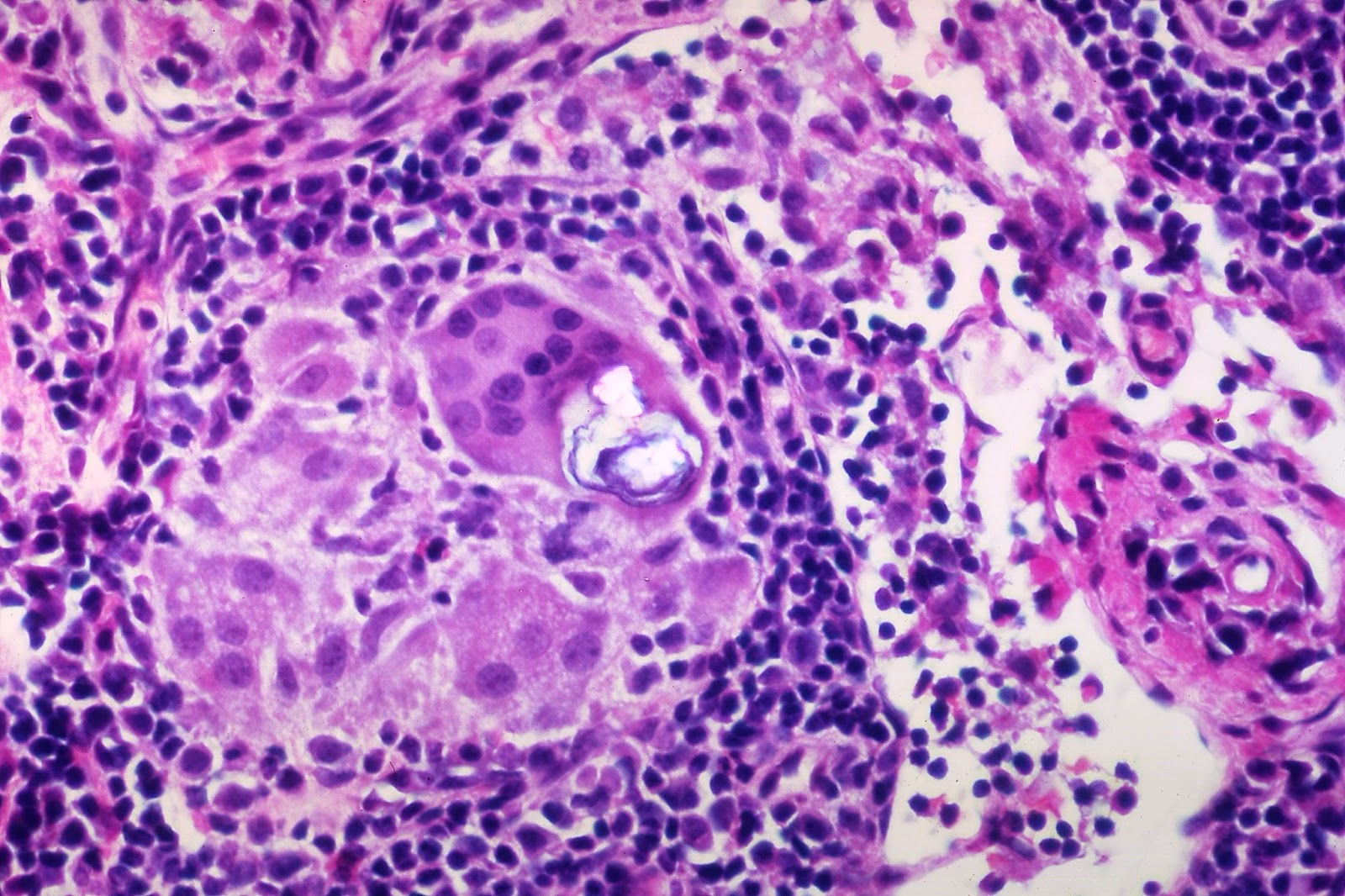
sacroidiosis with psamoma bodies
Keep in mind these tips during your preparation to improve your retention of material, don’t forget to check our tutoring guides at www.usmleprepguide.com to have a detailed tutor for your preparation, also if you have other ideas to help for studying let us know in the comment section.